Bad Wünnenberg
Digital Passport
Nomenclature and Geography
Category: City / Municipality
Summary
About the place: Bad Wünnenberg is a spa town in the district of Paderborn, in North Rhine-Westphalia, Germany. It is located on the southern edge of the district in the hilly landscape of the Sauerland region.
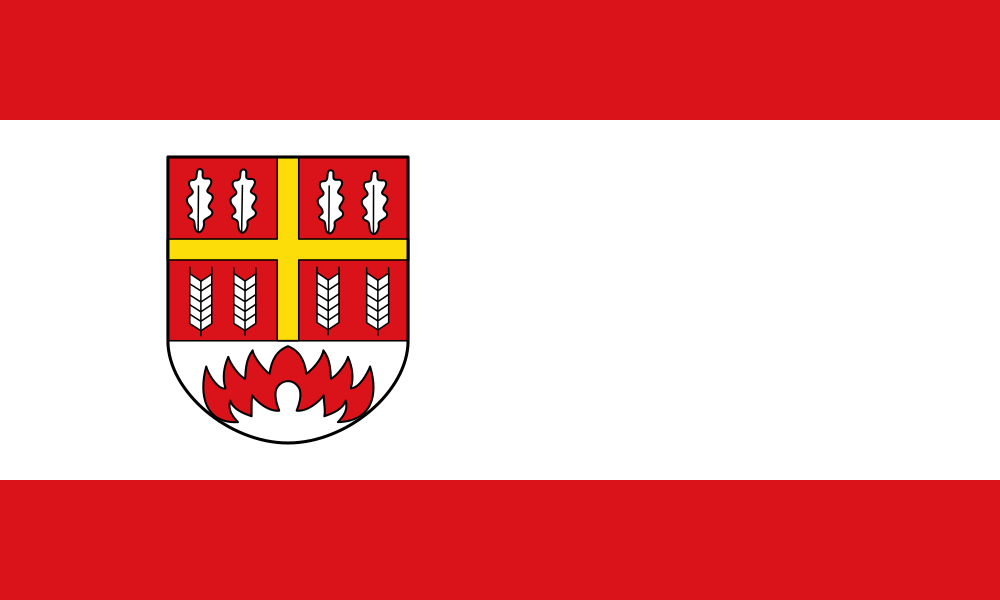
Flag Description: The flag of the town consists of three horizontal stripes of red, white, and red, with the middle white stripe being wider than the outer red stripes. The town's coat of arms is placed in the hoist side of the central white stripe. The escutcheon features a red field divided by a golden cross, with two silver oak leaves in each of the upper quarters, and two silver ears of grain in each of the lower quarters. The base of the shield is silver with a red flame rising from the bottom edge. The aspect ratio is 3:5.
Symbolism: The red and white colors are derived from the historical colors of the Prince-Bishopric of Paderborn. The golden cross refers to the historical and ecclesiastical affiliation with Paderborn. The oak leaves symbolize the forested surrounding countryside, while the ears of grain represent the agricultural tradition of the surrounding villages. The red flame in the base refers to Saint Anthony or historical events related to fires and the re-founding of the settlement.
Statistics
Area
161.30 km²
Population
12,347