Criciúma
Digital Passport
Nomenclature and Geography
Category: City / Municipality
Summary
About the place: Criciúma is an important city in the southern Brazilian state of Santa Catarina, well known for its coal mining history and industrial sector. It serves as a major economic and cultural hub in the southern region of the state.
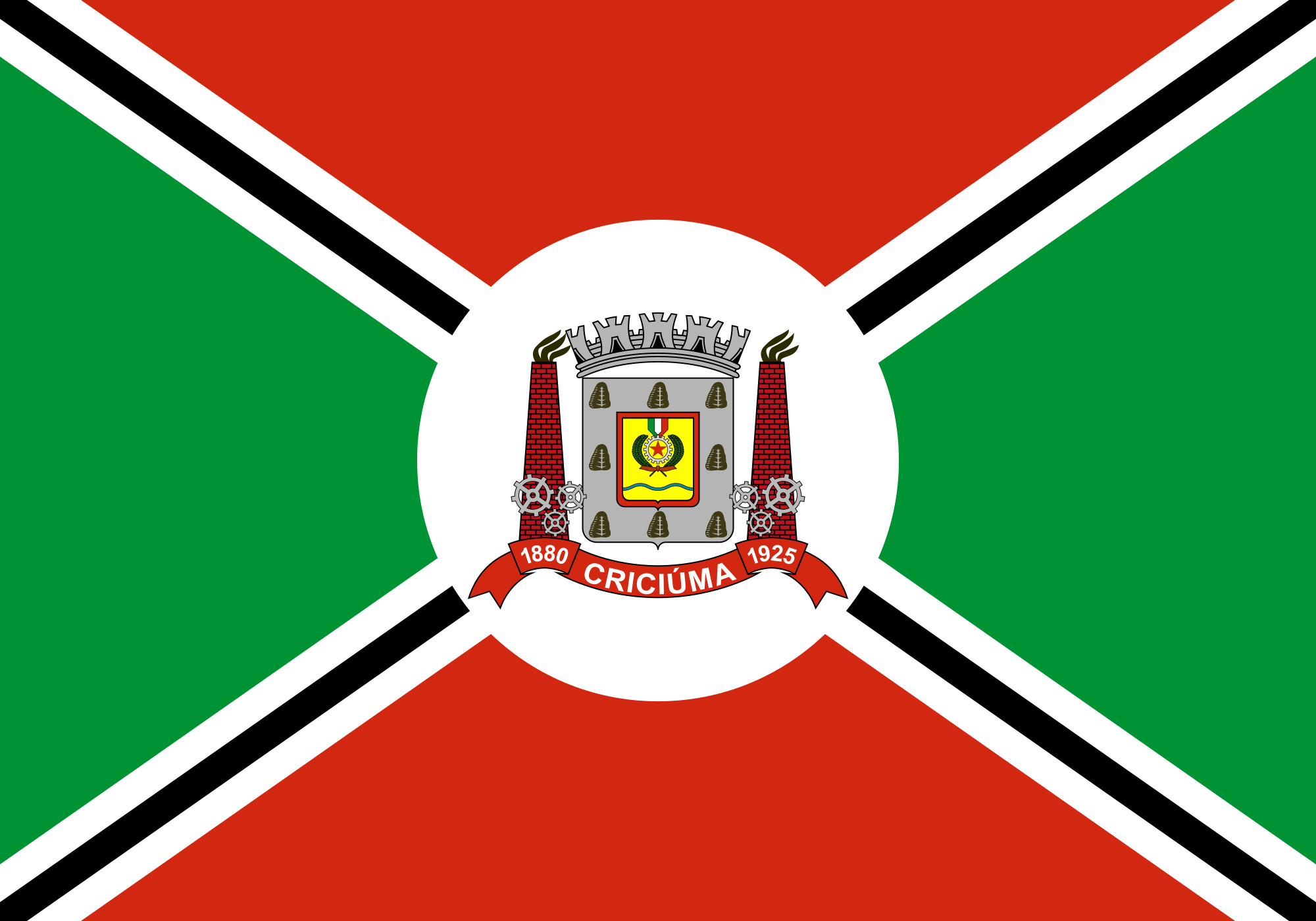
Flag Description: The flag is divided by a diagonal Saltire into four triangular fields: the top and bottom fields are red, while the left and right fields (from the viewer's perspective) are green. The saltire consists of three stripes—a central black stripe bordered on both sides by narrow white stripes. In the center of the flag is a white circular disc bearing the municipal coat of arms. The coat of arms features a gray shield surmounted by a mural crown, flanked by two brick industrial chimneys and cogwheels. Below the shield is a red ribbon with the white text CRICIÚMA and the years 1880 and 1925.
Symbolism: The red color symbolizes the courage and strength of the people, while green represents natural wealth and agriculture. The black color of the saltire and the industrial chimneys on the coat of arms refer to coal mining and the city's industrial tradition. White signifies peace. The year 1880 on the ribbon commemorates the foundation of the settlement, and 1925 marks its political emancipation.
Statistics
Area
235.28 km²
Population
214,493