Királyegyháza
Digital Passport
Nomenclature and Geography
Category: City / Municipality
Summary
About the place: Királyegyháza is a village in southern Hungary, located in Baranya County within the Szentlőrinc District. It lies near the town of Szentlőrinc in the flat landscape of southwestern Transdanubia.
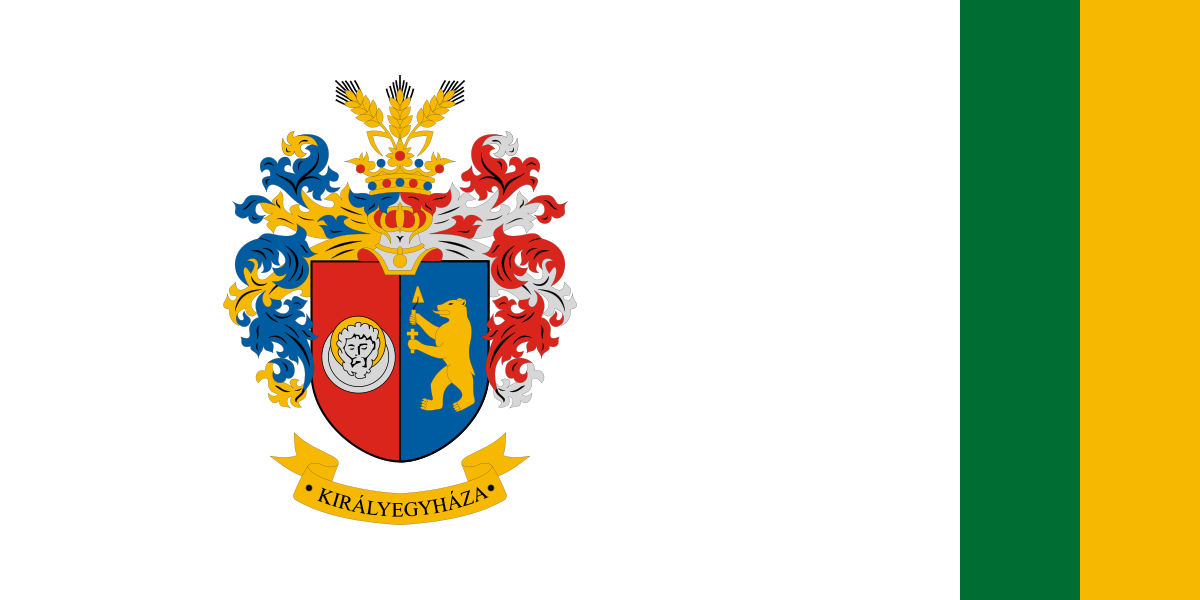
Flag Description: The flag field consists of two parts: a larger hoist section made of a white field containing the full municipal coat of arms—complete with helmet, crest, mantling, and a yellow ribbon bearing the black text 'KIRÁLYEGYHÁZA'—and a fly section composed of two vertical stripes, green and yellow. The shield is party per pale; in the dexter red field is a silver circular medallion featuring a face (Saint Veronica's veil or John the Baptist), and in the sinister blue field is a golden bear rampant holding an arrow and a cross. Above the shield is a crowned helmet topped with three golden ears of wheat. The mantling is blue and gold on the dexter side, and red and silver on the sinister side.
Symbolism: White symbolizes purity, while the green and yellow stripes represent the agricultural character of the village and its surrounding nature. The coat of arms depicts religious and historical motifs associated with local heritage and church patrons, while the ears of wheat in the crest denote the fertility of the land and traditional grain farming.
Statistics
Area
22.88 km²
Population
857