Lendvajakabfa
Digital Passport
Nomenclature and Geography
Category: City / Municipality
Summary
About the place: Lendvajakabfa is a small village in Zala County in southwestern Hungary, located near the border with Slovenia. It is situated in a scenic, forested area within the Lenti District.
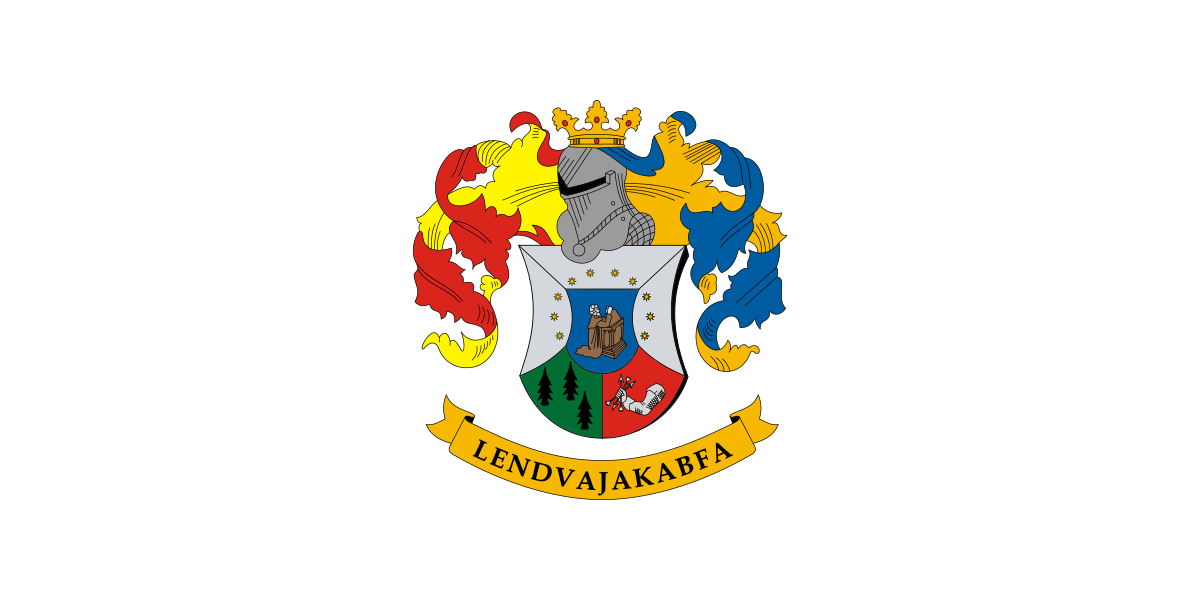
Flag Description: The flag consists of a white rectangular field with the full coat of arms of the municipality centered on it. The coat of arms features a shield with a silver/white border decorated with eight golden stars. The central blue field depicts a bird's nest on a wooden stump, while the base is divided into a green field with three black spruce trees and a red field with an armored arm holding three ears of wheat. Above the shield rests a helmet with a golden crown as a crest and red-gold and blue-gold mantling. Below the shield is a golden ribbon bearing the black majuscule inscription 'LENDVAJAKABFA'.
Symbolism: The white field of the flag symbolizes purity and peace. The coat of arms reflects local history and nature: the spruce trees and green field represent the forested region of Zala, the ears of wheat held by an arm symbolize agriculture, the nest represents home and family, and the stars on the border commemorate the community.
Statistics
Area
4.76 km²
Population
19