Madocsa
Digital Passport
Nomenclature and Geography
Category: City / Municipality
Summary
About the place: Madocsa is a village in Hungary, located in Tolna County near the banks of the Danube River. The settlement has a rich history tied to a former Benedictine abbey and traditional river trade.
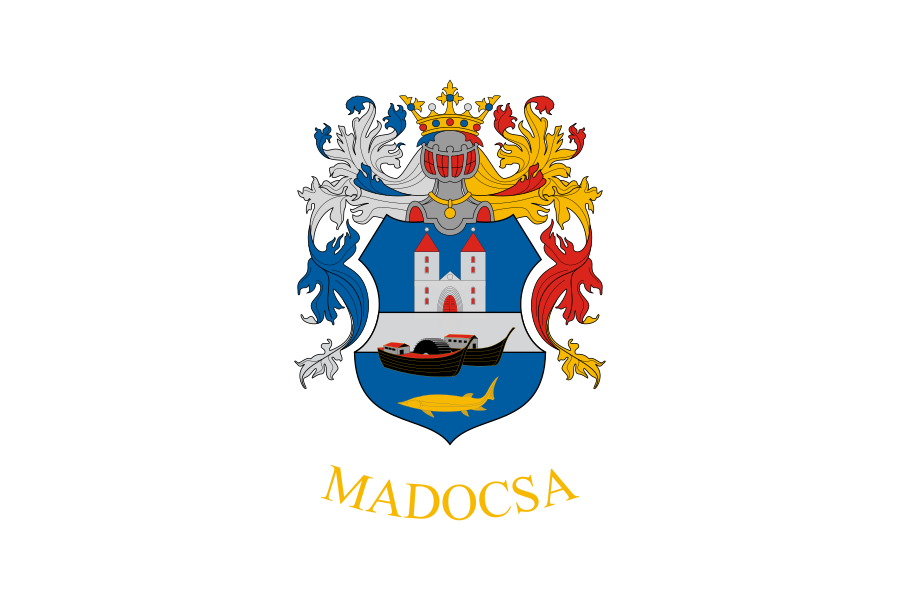
Flag Description: The flag consists of a white rectangular field. In the center is the complete municipal coat of arms featuring a helmet, crest, and mantling. The shield is blue; its upper section depicts a silver church with two towers and red roofs. A silver fess across the middle displays two water mills (boat mills). The lower blue section contains a golden fish swimming toward the hoist. Above the shield rests a helmet with a crown and rich mantling (blue-silver on the left, red-gold on the right). Below the coat of arms, the golden inscription 'MADOCSA' is arranged in a gentle arch.
Symbolism: The white color of the flag serves as a clean field for the municipal coat of arms. The church on the shield symbolizes the historical religious heritage and the former Benedictine abbey in Madocsa. The boat mills and the fish represent the village's close relationship with the Danube River, traditional fishing, and water-powered milling.
Statistics
Area
43.19 km²
Population
1,827