Mélykút
Digital Passport
Nomenclature and Geography
Category: City / Municipality
Summary
About the place: Mélykút is a town in the Bács-Kiskun county of Hungary, located in the Southern Great Plain region near the Serbian border. Situated in a flat agricultural landscape, it is well known for the deep well from which it derives its name.
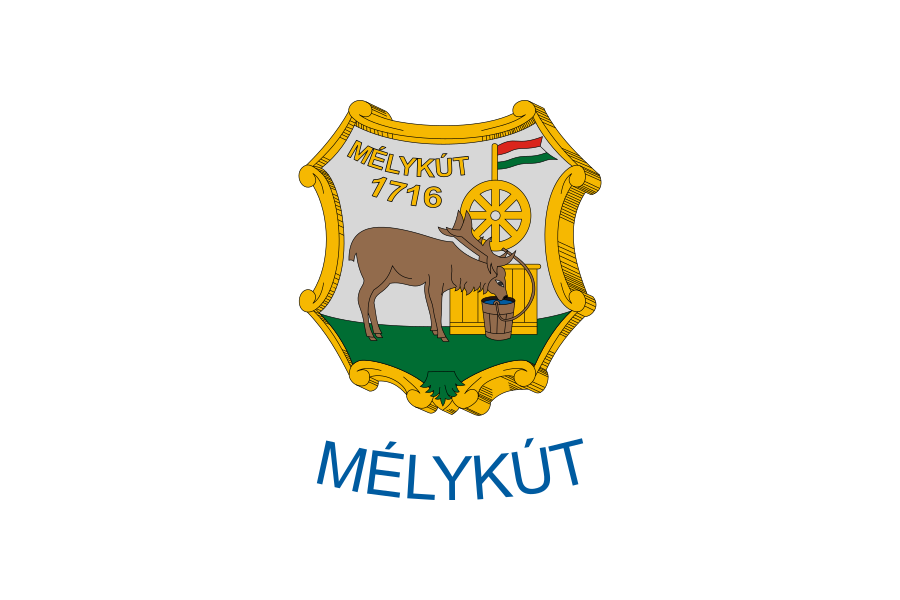
Flag Description: The flag of Mélykút consists of a white rectangular field with the town's coat of arms centered on it, framed by a decorative golden cartouche. Inside the shield, on a green base, a brown stag facing left (from the viewer's perspective) drinks from a wooden bucket at a sweep well. Above the stag in the upper part of the shield is the golden inscription 'MÉLYKÚT 1716'. A small Hungarian tricolor flag (red-white-green) flies from the post of the well. Below the shield, the blue text 'MÉLYKÚT' is written in an arch.
Symbolism: The name Mélykút literally translates to 'deep well', directly symbolized by the sweep well depicted on the coat of arms and flag. The stag drinking from the bucket refers to local wildlife and the region's natural environment. The year 1716 commemorates the resettling and re-establishment of the village after Ottoman rule. The Hungarian flag flying on the well indicates national identity.
Statistics
Area
123.46 km²
Population
4,720