Pannonhalma
Digital Passport
Nomenclature and Geography
Category: City / Municipality
Summary
About the place: Pannonhalma is a town in western Hungary, located in Győr-Moson-Sopron County. It is globally famous for its thousand-year-old Benedictine Archabbey, a UNESCO World Heritage site.
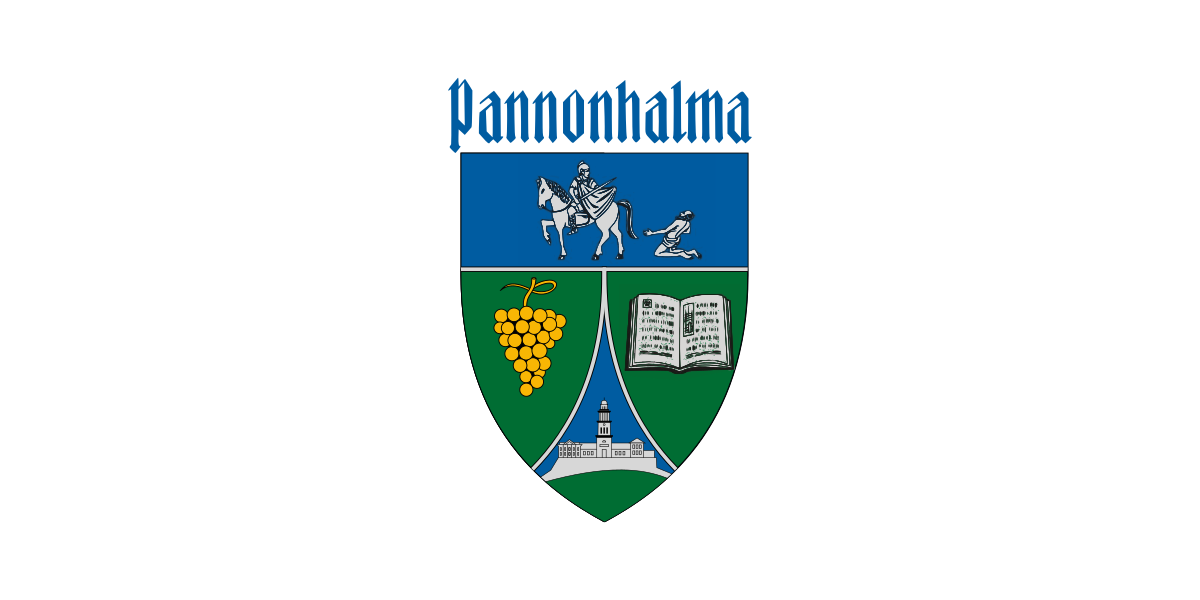
Flag Description: The flag consists of a white rectangular field featuring the town's coat of arms in the center. Above the shield, the name 'Pannonhalma' is written in blue Neo-Gothic script. The shield itself is party per fess, with the lower half party per pale with an inserted point. The upper blue field depicts Saint Martin on horseback sharing his cloak with a beggar. The lower dexter field (left from the viewer's perspective) is green with a golden bunch of grapes. The lower sinister field (right from the viewer's perspective) is also green and displays an open book. Inserting into the lower base is a blue point depicting the white silhouette of the Pannonhalma monastery complex.
Symbolism: Saint Martin in the upper field refers to the tradition that he was born near Mount Sabaria (present-day Pannonhalma). The open book represents learning and the Benedictine monastic tradition of the local archabbey, while the monastery silhouette directly depicts the town's famous landmark. The bunch of grapes highlights the region's rich winemaking heritage, and the green color symbolizes nature and the fertility of the surrounding landscape.
Statistics
Area
29.58 km²
Population
3,890