Salzgitter
Digital Passport
Nomenclature and Geography
Category: City / Municipality
Summary
About the place: Salzgitter is an independent city in Lower Saxony, Germany, located between Hildesheim and Braunschweig. Established in 1942 through the merger of several municipalities, it serves as a major industrial center with a strong heritage in iron ore mining and steel manufacturing.
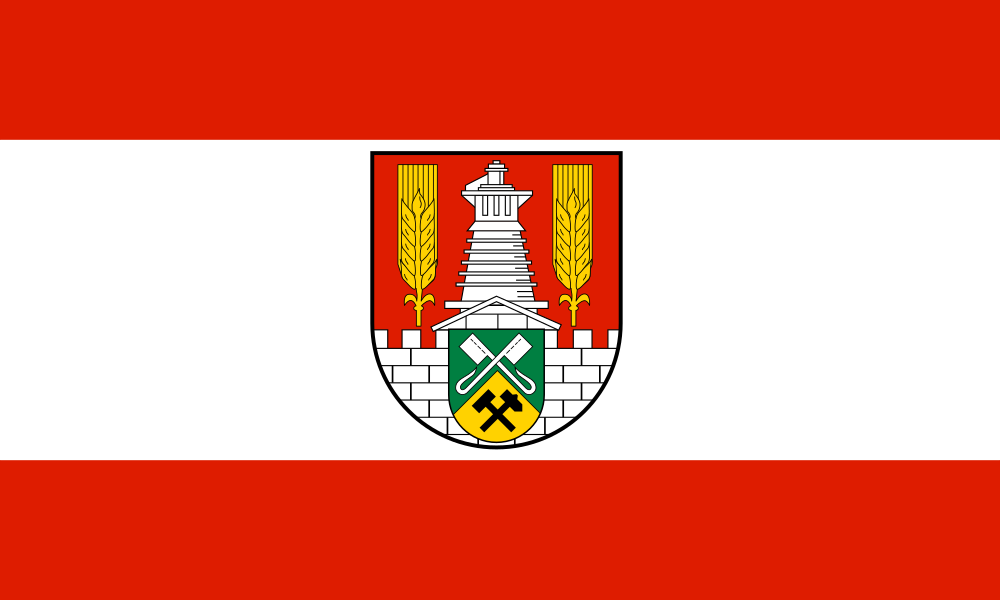
Flag Description: The city flag consists of two horizontal stripes, red on top and white on the bottom, with the city coat of arms centered. The coat of arms features a red shield with a silver crenellated wall and an open gate with a raised portcullis. Rising from behind the wall are two silver towers with black windows and pointed roofs. Between the towers rests a small shield displaying crossed red-and-white mining hammers beneath a red salt kettle.
Symbolism: The castle wall and towers represent municipal rights and the historical fortification of Salzgitter's original core. The crossed mining hammers on the small shield symbolize the area's rich iron ore mining and heavy industry traditions, while the salt kettle highlights the historical salt springs that gave the city its name.
Statistics
Area
223.96 km²
Population
104,948