Sándorfalva
Digital Passport
Nomenclature and Geography
Category: City / Municipality
Summary
About the place: Sándorfalva is a town in southern Hungary, located in Csongrád-Csanád County near Szeged. It was founded in 1879 following a devastating flood of the Tisza River to rehouse residents from the destroyed neighboring village of Algyő.
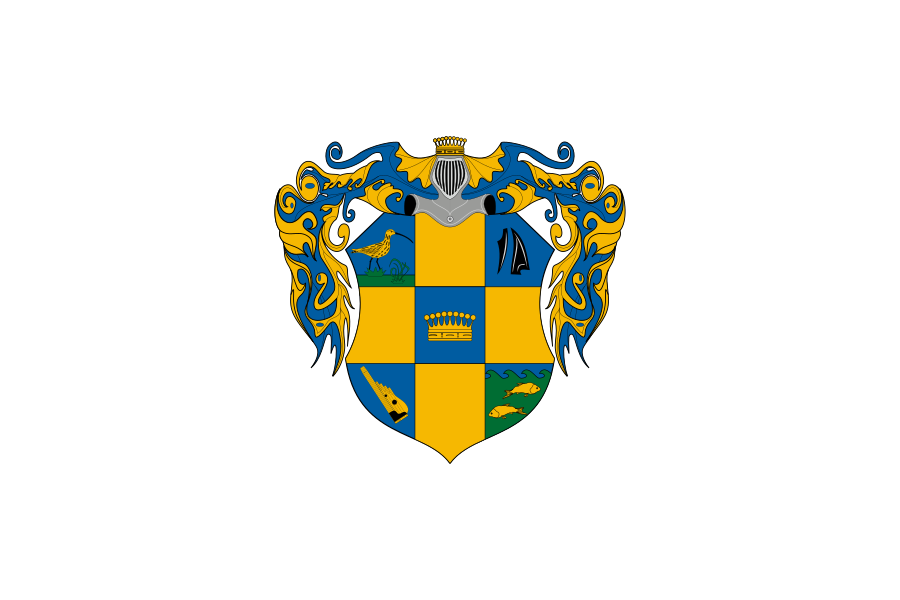
Flag Description: The flag of Sándorfalva consists of a white rectangular field with the full coat of arms of the town centered upon it. The shield is checkered into nine fields alternating between gold and blue (with the central blue field bearing a golden crown). The top-left field from the viewer's perspective depicts a bird on a green field with reeds, and the top-right field shows two plowshares. The bottom-left field features a zither, while the bottom-right field displays two golden fish in a green field beneath wavy lines. The shield is surmounted by a silver helmet with a crown and flanked by blue and gold mantling.
Symbolism: The white background represents purity and peace. The coat of arms reflects the history and geography of the town: agricultural tools (plowshares) denote fertility and farming traditions, the bird and fish symbolize the rich wildlife of the nearby Fehér-tó lake and Tisza river, while the zither represents the local folk traditions and musical culture.
Statistics
Area
55.77 km²
Population
7,887