Tiszakanyár
Digital Passport
Nomenclature and Geography
Category: City / Municipality
Summary
About the place: Tiszakanyár is a village in Szabolcs-Szatmár-Bereg county, in northeastern Hungary. It lies along the Tisza River near the town of Dombrád.
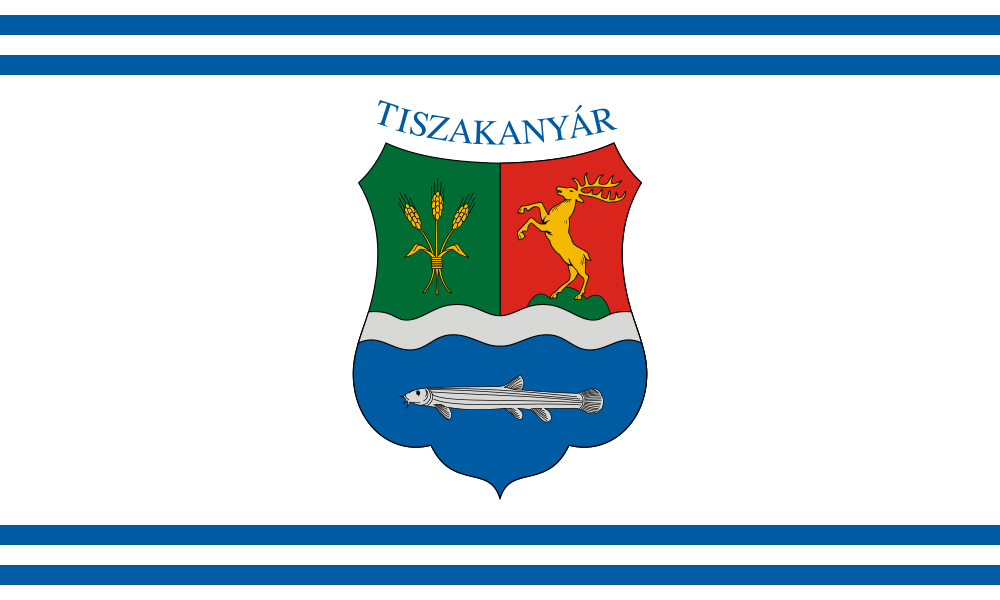
Flag Description: The flag field is white, bordered at both the top and bottom edges by two narrow blue horizontal stripes. In the center of the flag is the municipal coat of arms, surmounted by the blue arched inscription 'TISZAKANYÁR'. The shield is divided by a silver wavy fess, with the upper half per pale. The upper dexter green field (viewer's left) shows three golden ears of wheat bound into a sheaf. The upper sinister red field (viewer's right) features a golden stag rearing from a green triple mount. The lower blue field contains a silver fish swimming towards the hoist.
Symbolism: The blue stripes and the wavy fess in the coat of arms refer to the Tisza River, along which the village is situated and from which it derives its name. The ears of wheat symbolize the agricultural tradition and fertility of the region. The stag in the red field refers to the local wildlife and forest heritage, while the fish in the lower blue field represents the tradition of fishing associated with the Tisza.
Statistics
Area
15.51 km²
Population
1,563