Újhartyán
Digital Passport
Nomenclature and Geography
Category: City / Municipality
Summary
About the place: Újhartyán is a town in Pest County, central Hungary, located roughly 40 kilometers southeast of Budapest on the Great Hungarian Plain. Repopulated in the 18th century by German and Slovak settlers, the community maintains a vibrant Danube Swabian cultural heritage alongside a growing industrial and agricultural economy.
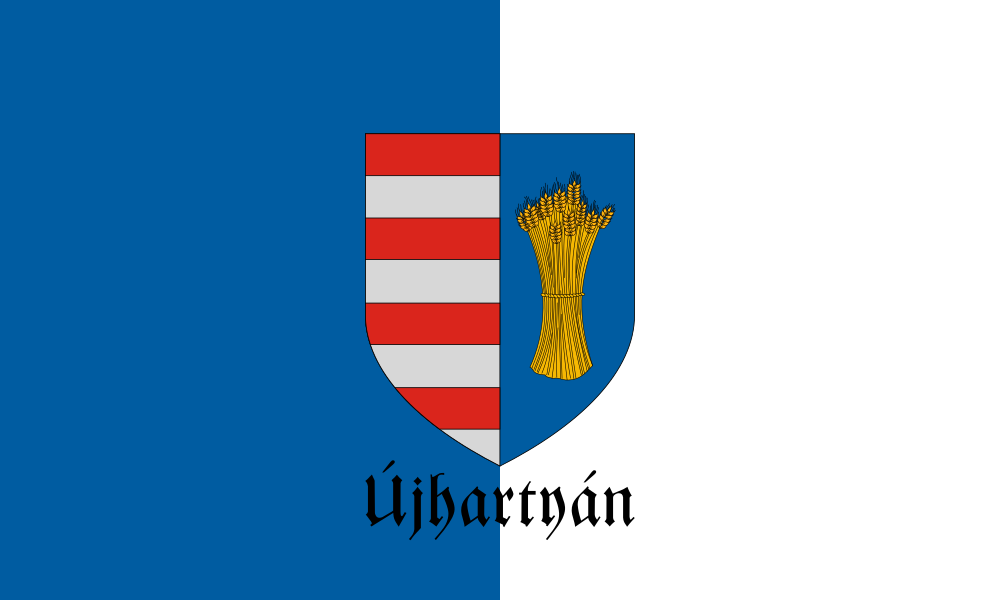
Flag Description: The flag consists of two vertical stripes of blue at the hoist and white at the fly. Centered on the field is the municipal coat of arms, featuring a shield divided per pale: the hoist half is barry of eight gules and argent, while the fly half bears a golden sheaf of wheat on an azure field. Directly beneath the shield, spanning the central dividing line, is the black Gothic inscription Újhartyán.
Symbolism: The red and silver bars in the coat of arms reference the historic Árpád stripes, symbolizing the town's ties to the Hungarian state, while the golden sheaf of wheat on a blue field represents agriculture, fertility, and the livelihood of the local population on the Great Hungarian Plain. The blue and white field reflects peace and regional heritage, with the blackletter typography honoring the historical German Danube Swabian settlers who shaped the modern community.
Statistics
Area
22.43 km²
Population
2,865