Várzea Grande, Mato Grosso
Digital Passport
Nomenclature and Geography
Category: City / Municipality
Summary
About the place: Várzea Grande is the second most populous municipality in the Brazilian state of Mato Grosso, situated directly adjacent to the state capital Cuiabá across the Cuiabá River. It serves as a major industrial and transportation hub for the region, hosting the Cuiabá/Várzea Grande International Airport.
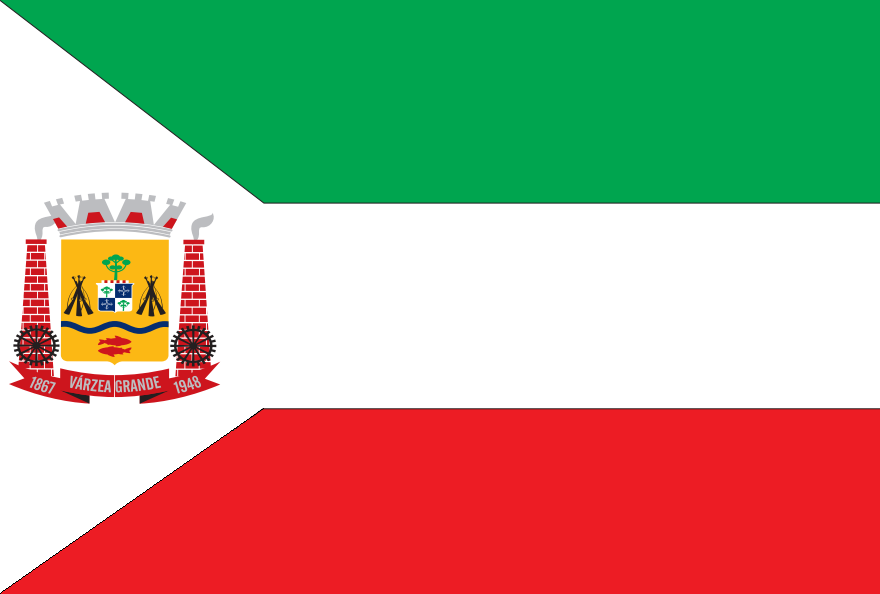
Flag Description: The flag consists of three horizontal stripes: green at the top, white in the middle, and red at the bottom. At the hoist side, there is a white trapezoidal field extending into the middle, formed by the diagonal truncations of the top green and bottom red stripes. Inside this white hoist field rests the complete coat of arms of Várzea Grande, featuring a yellow shield with local symbols, industrial chimneys on the sides, a mural crown on top, and a red scroll at the bottom bearing the city's name and the dates 1867 and 1948.
Symbolism: The green color symbolizes the natural wealth and agriculture of Mato Grosso, white represents peace and purity of intentions, and red stands for courage, strength, and labor. The coat of arms at the hoist highlights the historical and industrial development of the municipality—from its founding in 1867 and municipality status in 1948 to its traditional industries and geographical features.
Statistics
Area
938.06 km²
Population
300,053