Wesselburen
Digital Passport
Nomenclature and Geography
Category: City / Municipality
Summary
About the place: Wesselburen is a small historic town in the district of Dithmarschen in Schleswig-Holstein, northern Germany. It is located in the fertile region of Norderdithmarschen near the North Sea coast.
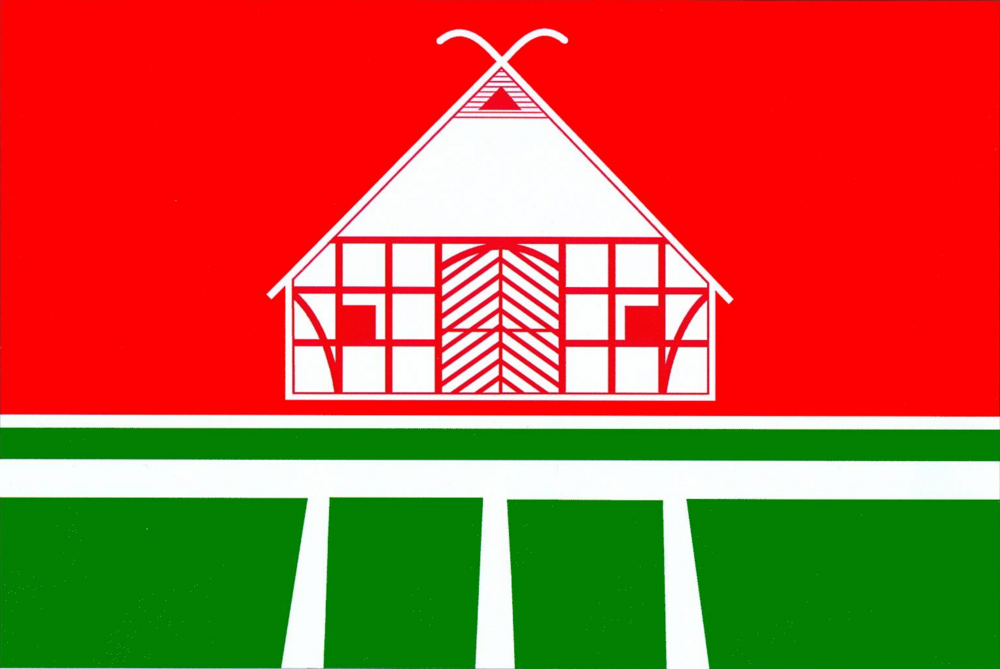
Flag Description: The flag consists of two main horizontal stripes: an upper red stripe and a lower green stripe, separated by a narrow green line and a white horizontal bar above it. In the red upper section, there is a stylized white front gable of a traditional half-timbered farmhouse (Haubarg) with red structural details and stylized swan necks crossing at the top of the roof. In the lower green section, three vertical white stripes extend downwards from the white horizontal bar, slightly widening toward the bottom edge.
Symbolism: Red and green represent the traditional colors of the Dithmarschen region. The white building in the upper section depicts a traditional Haubarg farmhouse, characteristic of the local rural heritage. The lower green area symbolizes the fertile marshland, while the vertical white stripes evoke the drainage ditches and agricultural field division typical of the marsh region.
Statistics
Area
8.78 km²
Population
3,524