Wörth am Main
Digital Passport
Nomenclature and Geography
Category: City / Municipality
Summary
About the place: Wörth am Main is a historic town in the Lower Franconian district of Miltenberg in Bavaria, Germany, situated on the left bank of the Main River. Known for its long shipbuilding tradition and Roman heritage, the town lies at the eastern foothills of the Odenwald mountains.
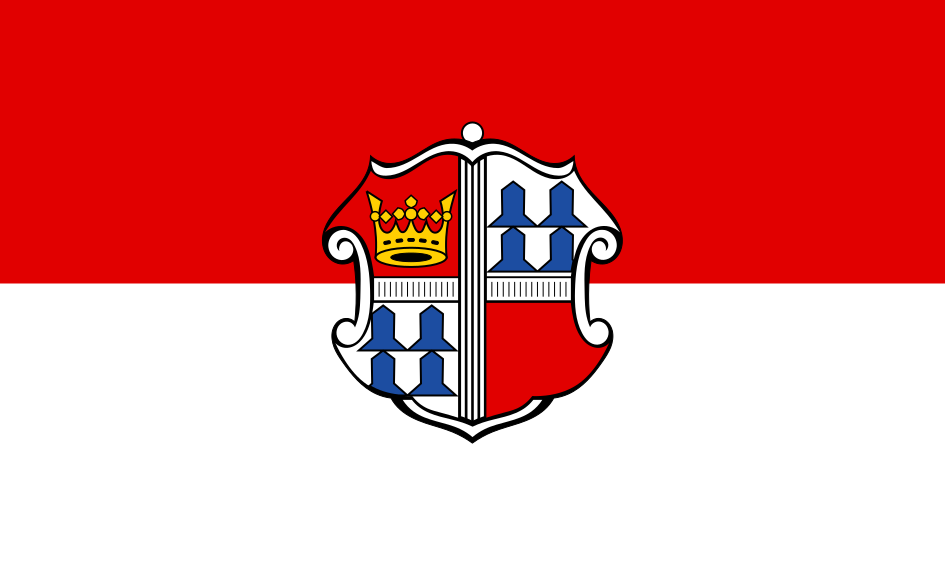
Flag Description: The flag of Wörth am Main consists of a horizontal bicolour of red over white. Centered over both stripes is the ornate baroque municipal coat of arms with a black-and-white scroll border, quartered by a white hatched cross. The upper hoist (dexter) red quarter displays a yellow (gold) open crown. Both the upper fly (sinister) and lower hoist (dexter) white quarters each feature four blue vair bells (iron hats) arranged in two rows of two. The lower fly (sinister) quarter is plain red.
Symbolism: The red and white stripes of the flag reflect the historical colours of the Electorate of Mainz (Kurmainz), which ruled the town for centuries. The crown in the coat of arms symbolizes historical royal ties and privileges, while the blue vair bells are derived from the ancestral arms of the Lords of Breuberg, who held and administered the local territory during the Middle Ages.
Statistics
Area
15.88 km²
Population
4,791