Wuppertal
Digital Passport
Nomenclature and Geography
Category: City / Municipality
Summary
About the place: Wuppertal is a major industrial and university city in the German state of North Rhine-Westphalia, situated along the Wupper River in the hilly Bergisches Land region. Formed in 1929 through the merger of Barmen, Elberfeld, and several neighboring municipalities, it is famous for its iconic suspended monorail (Schwebebahn) and rich textile heritage.
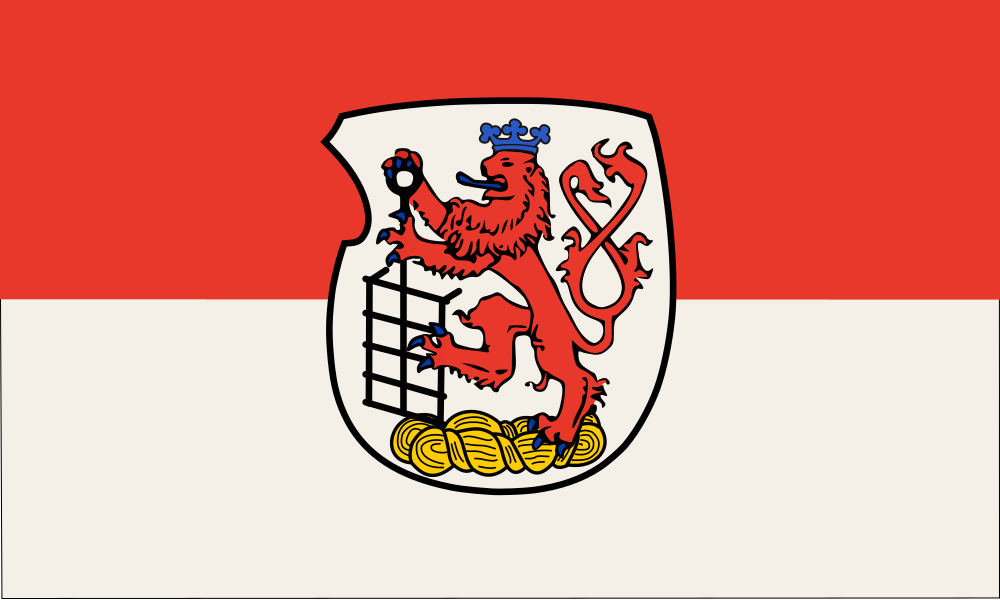
Flag Description: The flag consists of two equal horizontal stripes of red over white (off-white). Centered over both stripes is the municipal coat of arms, depicted on a black-outlined white tournament shield with a lance-rest notch on the viewer's left (dexter). Inside the shield, standing on a yellow (gold) skein of yarn, is a red double-tailed lion rampant facing left (dexter), crowned, langued, and armed in blue, holding an upright black gridiron in its forepaws.
Symbolism: The red and white colors of the flag reflect the traditional colors of the former cities of Barmen and Elberfeld as well as the Duchy of Berg. The red double-tailed lion with a blue crown and claws is the historic Lion of Berg (Bergischer Löwe), symbolizing the former territorial rulers of the region. The black gridiron is the attribute of Saint Lawrence, the patron saint of Elberfeld, while the golden skein of yarn represents the historic yarn-bleaching monopoly (Garnnahrung) and textile industry that brought prosperity to Barmen and the Wupper valley.
Statistics
Area
168.39 km²
Population
358,938